Orchestrate distributed energy resources at the feeder level with sub-second control and carrier-grade reliability.
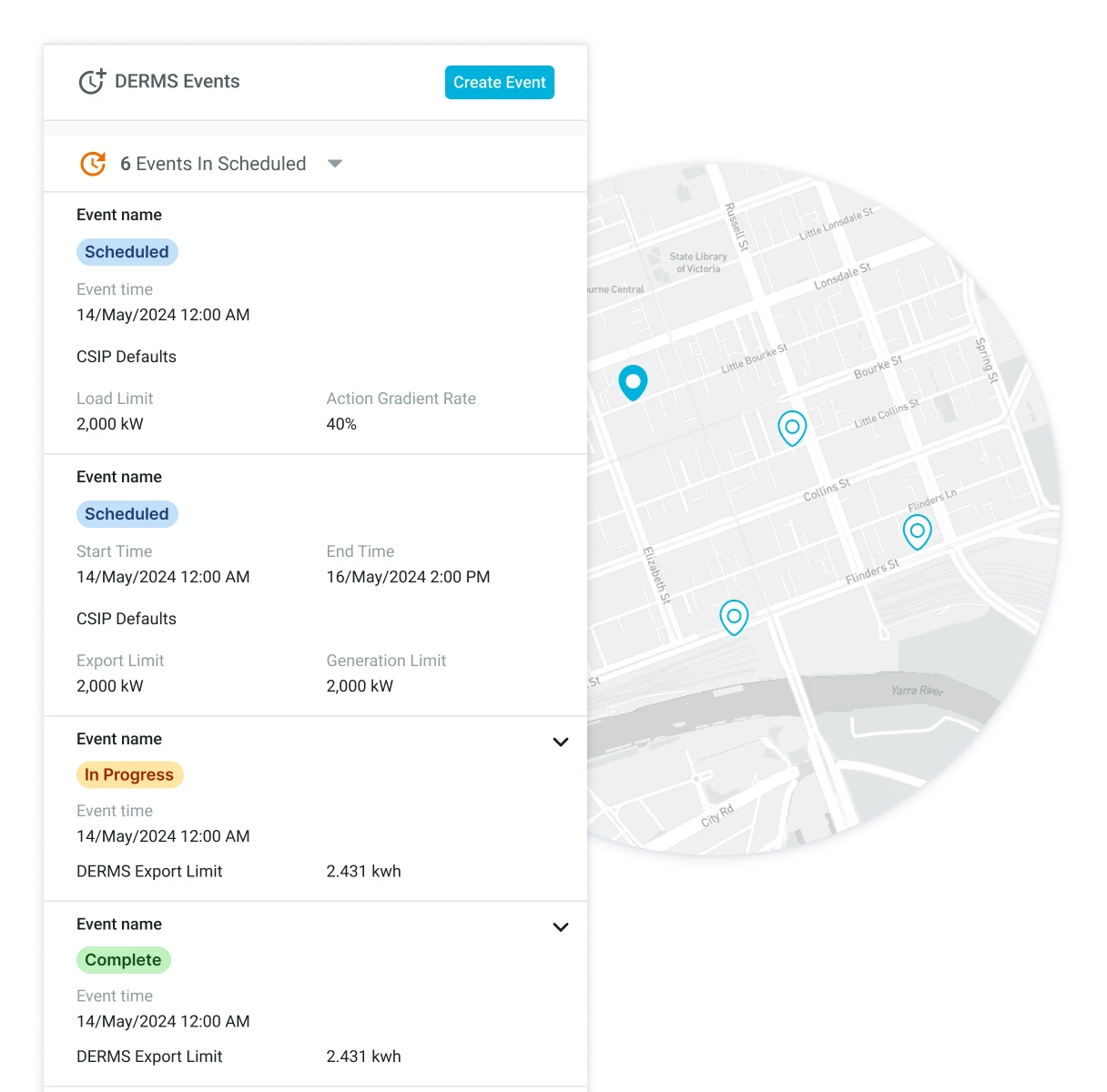
Maintain network integrity by managing demand and generation across your footprint. Our platform allows operators to trigger automated or manual response events based on real-time grid conditions, ensuring stability during peak stress or maintenance windows.
Granular Targeting: Deploy events by zone, specific feeder, asset type (BESS, Solar, HVAC), or individual partner fleets.
Real-time Response Tracking: Monitor the aggregate response of the fleet in real-time as assets ramp up or down to meet the constraint.
Dynamic Geofencing: Isolate control actions to specific geographic coordinates to manage local network congestion without impacting the wider fleet.
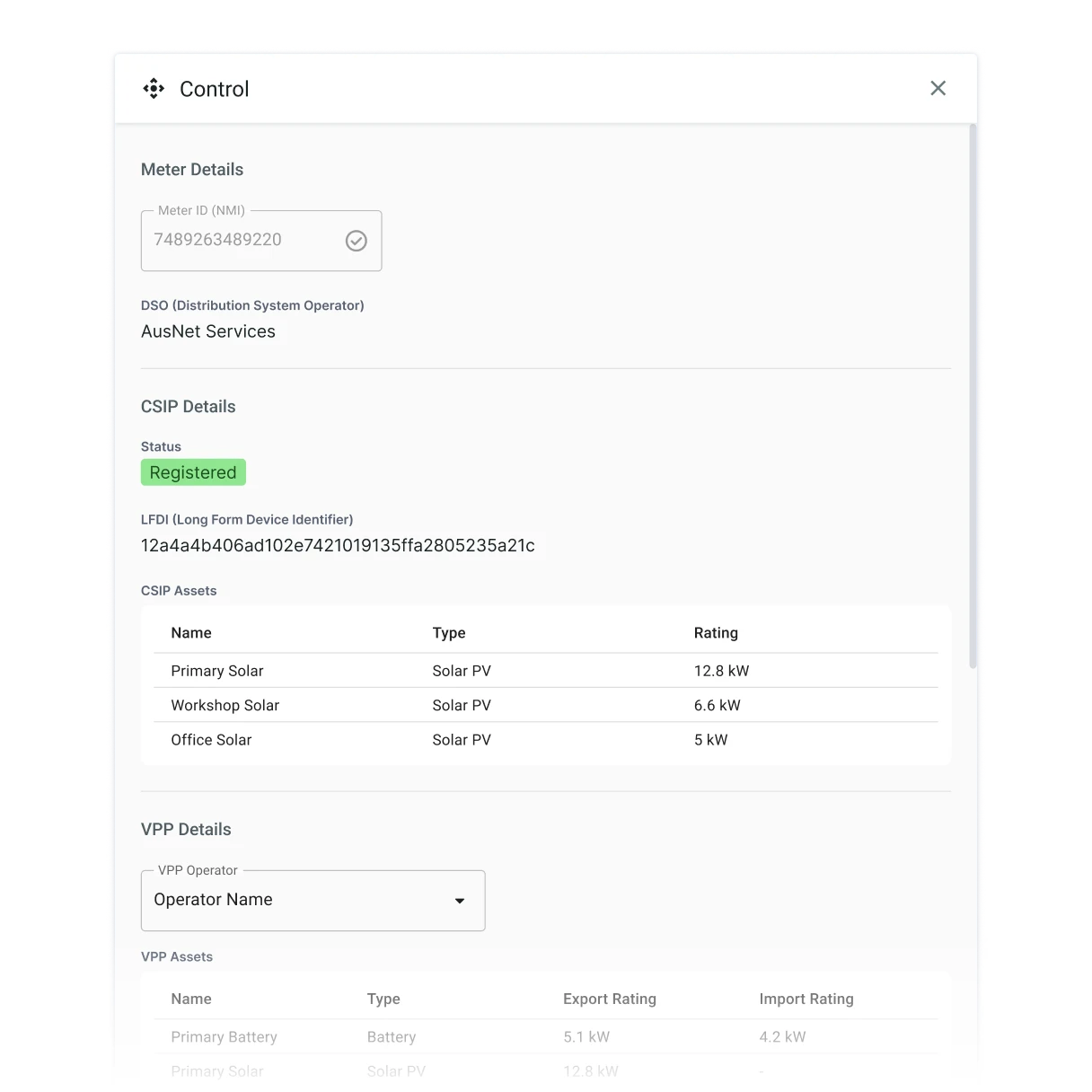
Move beyond simple monitoring to active, coordinated control of every asset in your network. The Pulse Gateway acts as the local point of authority, executing complex dispatch commands while ensuring site-level safety is never compromised.
Solar & Storage Management: Execute fleet-wide export limiting, PV curtailment, or specific battery charge/discharge setpoints to balance the grid.
Demand Response: Orchestrate load-shedding protocols or subtle reduction strategies for heavy industrial loads and HVAC systems.
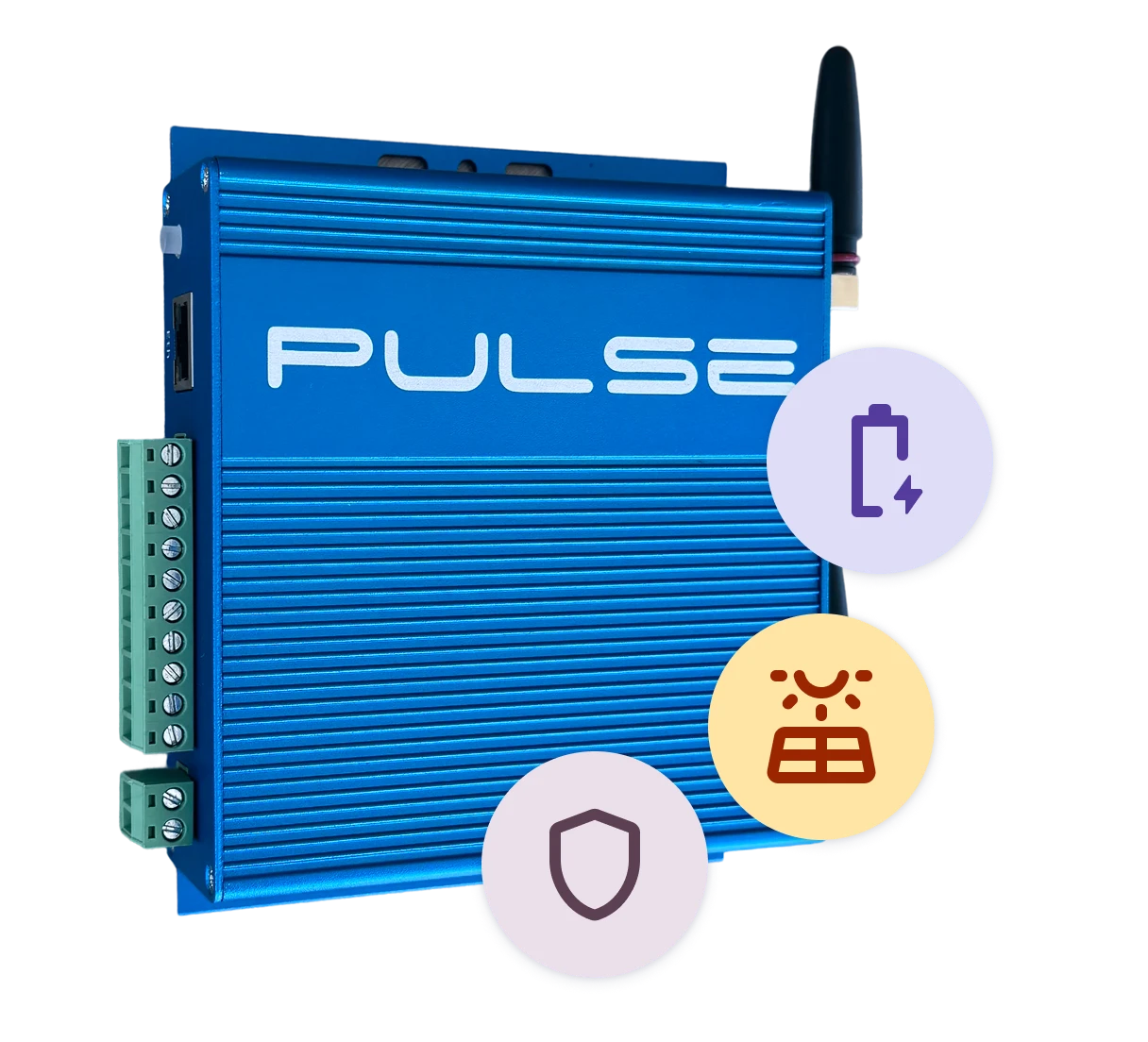
Autonomous Edge Fallback: If cloud connectivity is lost, our edge devices maintain site-specific safety constraints and local export limits automatically.
Compliance is not optional when managing grid-critical infrastructure. Enervaro is built from the ground up to meet the rigorous technical and security standards required by Australian DNSPs and global operators.
IEEE 2030.5 / CSIP-AUS: Fully compliant with the latest communication standards for secure utility-to-client DER management.
Immutable Event Logging: Every operator action, automated response, and gateway command is recorded in a tamper-proof audit trail for regulatory reporting and settlement.
Enterprise Security: Utilising outbound-only encrypted communications and read-only root filesystems at the edge to ensure the highest level of OT security.